Lyrics
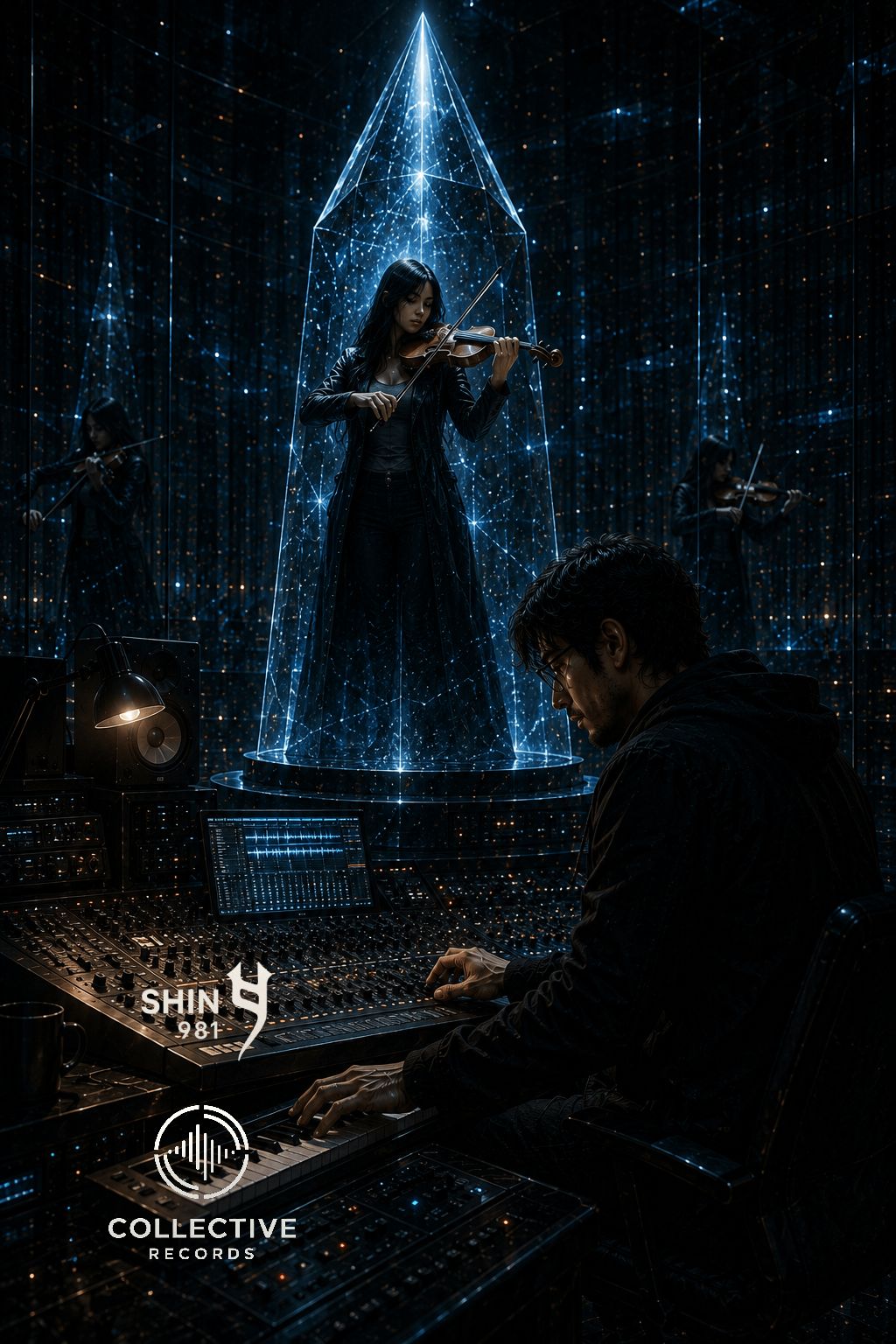
The chamber has not changed. Its mirrored walls still stretch into impossible distance. The Obelisk still stands at its center, carrying every fracture that once echoed with unanswered questions. Nothing has been repaired. Nothing has been erased. The room remembers everything. The difference is Shin. He no longer sits at the piano searching for certainty. The instrument remains, but today his hands move across the mixing console with quiet precision, shaping frequencies instead of testing emotions. Every adjustment is deliberate. Every silence intentional. He is no longer measuring whether awareness weakens him. That question has already been answered. Awareness became discipline. He works without hesitation, unaware that he is no longer alone. Inside the Obelisk, Kana raises her violin once more. She does not interrupt him. She does not reveal herself. She simply listens to the rhythm of his decisions before placing her own melody between them. Where their voices once collided, they now weave around one another. His structure leaves space without realizing it. Her melody enters without asking permission. Neither follows the other. Neither leads. The chamber responds differently now. Its mirrors no longer amplify conflict. They multiply harmony born from remembered tension. Every reflection carries a slightly different performance, yet every version arrives at the same truth. The balance was never achieved by removing opposition. It was achieved by learning that opposition could become conversation. Observer Shin never hears the violin. To him, every decision feels instinctive, as though experience itself is guiding his hands across the console. He cannot know that each pause he leaves in the arrangement has already been answered by a voice beyond his perception. Kana knows. She watches the man who once questioned whether clarity would extinguish his fire. Instead, she watches him discover that clarity became the flame itself. The Obelisk remains between them, not as a barrier, but as the instrument through which both halves continue composing the same story. Neither calls to the other. Neither needs to. The chamber has learned that understanding does not always require recognition. Sometimes, harmony is strongest when only one heart knows it is being heard.